Subcutaneous port catheter implantation by interventional radiologist in oncology patients
DOI:
https://doi.org/10.53903/01212095.157Keywords:
Catheters, implantable, Chemotherapy, Ambulatory surgical proceduresAbstract
Introduction: Subcutaneous port catheter implantation is a procedure that has shown benefits for patients requiring chemotherapy. Over time, this procedure has become more and more frequent in the hands of the interventional radiologist. Objective: To review the incidence of complications of the implantation of catheters with subcutaneous reservoir for chemotherapy by interventional
radiology in our institution. Methods: A retrospective review of the electronic records was carried out in a period of 31 months from the start of the procedure in our institution to assess the incidence of complications. Results: Between March 2019 and September 2021, a total of 377 hemotherapy catheters were implanted, a procedure carried out in the fluoroscopy suite under local anesthesia,
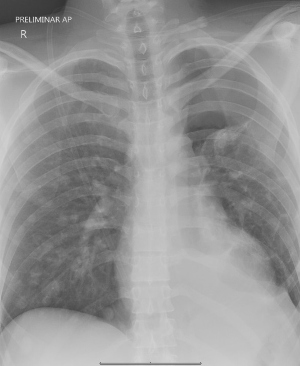
except for one that was performed in the operating room under general anesthesia. The incidence of complications was relatively low, reaching 8.2%, and the spectrum of complications included pneumothorax, suture dehiscence, infection, port rotation and port extrusion. Conclusion: Our
results indicate that central catheters with subcutaneous port can be implanted safely in the fluoroscopy suite under local anesthesia by the interventional radiologist under ultrasonographic and fluoroscopic guidance.
Downloads
References
Tabatabaie O, Kasumova G, Eskander M, Critchlow J, Tawa N, Tseng J. Totally implantable venous access devices. A review of complications and management strategies. Am J Clin Oncol. 2017;40:94-105.
Niederhuber JE, Ensminger W, Gyves JW, et al. Totally implanted venous and arterial access system to replace external catheters in cancer treatment. Surgery.1982;92:706-12.
Morris SL, Jaques PF, Mauro MA. Radiology-assisted placement of implantable subcutaneous infusion ports for long-term venous access. Radiology. 1992;184(1):149-51. https://doi.org/10.1148/radiology.184.1.1609072
Feo CF, Ginesu GC, Bellini A, Cherchi G, Scanu AM, Cossu ML, et al. Cost and morbidity analysis of chest port insertion in adults: Outpatient clinic versus operating room placement. Ann Med Surg. 2017;21:81-4. http://dx.doi.org/10.1016/j.amsu.2017.07.056
LaRoy JR, White SB, Turaga K, Molnar JA, Hohenwalter EJ, Hieb RA, et al. Morbidity analysis of chest port insertion: interventional radiology vs. surgical placement. JVIR. 2014;25(3, Supplement). https://doi.org/10.1016/j.jvir.2013.12.282
Machat S, Eisenhuber E, Pfarl G, Stübler J, Koelblinger C, Zacherl J, et al. Complications of central venous port systems: a pictorial review. Insights Imag. 2019;10(86).
https://doi.org/10.1186/s13244-019-0770-2
Toro A, Magazu S, Fiorino L, Di Carlo I. Port catheter tip positioning is essential. Langenbecks Arch Surg. 2022;407:1311-2. https://doi.org/10.1007/s00423-022-02506-8
Biffi R, de Braud F, Orsi F, Pozzi S, Mauri S, Goldhirsch A, et al. Totally implantable central venous access ports for long-term chemotherapy. A prospective study analyzing complications and costs of 333 devices with a minimum follow-up of 180 days. Ann Oncol. 1998;9(7):767-73. https://doi.org/10.1023/a:1008392423469
Bick RL. Cancer-associated thrombosis. N Engl J Med. 2003;349:109-11. https://doi.org/10.1056/NEJMp030086
Bertoglio S, Solari N, Mesmaroz P, Vassallo F, Bonvento M, Pastorino S, et al. Efficacy of normal saline versus heparinized saline solution for locking catheters of totally implantable long-term central vascular access devices in adult cancer patients. Cancer Nursing. 2012;35(4):E35-E42. https://doi.org/10.1097/NCC.0b013e31823312b1
Downloads
Published
How to Cite
Issue
Section
License
Copyright (c) 2023 Revista Colombiana de Radiología

This work is licensed under a Creative Commons Attribution-NonCommercial-ShareAlike 4.0 International License.
La Revista Colombiana de Radiología es de acceso abierto y todos sus artículos se encuentran libre y completamente disponibles en línea para todo público sin costo alguno.
Los derechos patrimoniales de autor de los textos y de las imágenes del artículo como han sido transferidos pertenecen a la Asociación Colombiana de Radiología (ACR). Por tanto para su reproducción es necesario solicitar permisos y se debe hacer referencia al artículo de la Revista Colombiana de Radiología en las presentaciones o artículos nuevos donde se incluyan.