Brain MRI findings in Percheron syndrome. A clinical case report
DOI:
https://doi.org/10.53903/01212095.322Keywords:
Magnetic resonance imaging, Percheron syndrome, Artery of Percheron, Thalamic infarctionAbstract
Introduction: Percheron syndrome (PS) or bilateral thalamic infarction, is a rare entity that represents 0.1 % of total ischemic strokes with a prevalence that is estimated to be between 4% to11.7 % in the general population. PS has a variable clinical features and sometimes results in a diagnostic challenge, due to the variability of the vascular anatomy of the vessels that supply the thalamus and the cerebral territories that can be affected in case of ischemia; the objectives of this article are to present a clinical case of PS in a comorbid patient whose diagnosis was achieved by
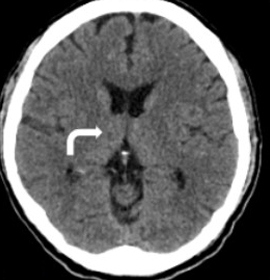
brain magnetic resonance imaging (MRI); describe the clinical approach and imaging findings of this entity and emphasize some key aspects of the thalamic blood supply for the proper diagnosis and classification of PS on MRI. Materials and methods: The clinical case of a 60-year-old patient with multiple cardiovascular diseases and recent coronary revascularization who had a sudden deterioration in the state of consciousness with oculomotor alterations is reported. The brain MRI revealed an acute infarction with signs of hemorrhagic transformation in bilateral central medial thalamic and bilateral paramedian region of the midbrain in the territory of the Percheron artery (PA). The patient required invasive ventilatory assistance with subsequent removal and partial improvement of his neurological condition. Outcomes and conclusions: MRI is the study of choice in cases of suspected PS due to its high specificity and early diagnostic capacity. PA infarction
presents as an abnormal signal intensity on MRI and its main causes include small vessel disease and cardioembolism, being more prevalent in men with a mean age of presentation of 60 years and related to cardiovascular risk factors.
Downloads
References
Lamot U, Ribaric I, Popovic KS. Artery of Percheron infarction: review of literature with a case report. Radiol Oncol. 2015;49(2):141-6.
Jeong SW, Ryu WS. White matter hyperintensities are more strongly associated with recurrent hemorrhagic stroke than ischemic stroke. J Neurolog Sci. 2019;405:41.
Weerasinghe W, Kularatne S, Pathirage M. Paramedian thalamic syndrome due to occlusion of the artery of Percheron: A rare case of stroke. Ceylon Med J. 2019;64:30.
Wong ML, Edlow JA. Artery of Percheron stroke. J Emerg Med. 2018;55(1):114-7.
Phate N, Pawar T, Andhale A, Singh R, Talwar D, Acharya S, et al. Artery of Percheron stroke: A case report with a diagnostic challenge. Cureus. 2022;14:e21939.
Srinivasan A, Goyal M, Al Azri F, Lum C. State-of-the-art imaging of acute stroke. Radiographics. 2006;26 Suppl 1(suppl 1):S75-95.
Lazzaro NA, Wright B, Castillo M, Fischbein NJ, Glastonbury CM, Hildenbrand PG, et al. Artery of Percheron infarction: Imaging patterns and clinical spectrum. Am J Neuroradiol. 2010;31(7):1283-9.
García Borges N, Bermúdez García A, Martín Domínguez MÁ, Carmona Vela C, Jaen Garrido C, Daroca Martínez T. Síndrome de Percheron, trastorno muy inusual, en un posoperatorio de cirugía cardiaca. REC: CardioClinics. 2019;54(2):131-2.
Leach JL, Fortuna RB, Jones BV, Gaskill-Shipley MF. Imaging of cerebral venous thrombosis: Current techniques, spectrum of findings, and diagnostic pitfalls. Radio-Graphics. 2006;26(suppl_1):19-41.
Hedge A, Mohan S, Lath N, Lim T. Differential diagnosis for bilateral abnormalities of the basal ganglia and thalamus. RadioGraphics. 2011;31:5-30.
Downloads
Published
How to Cite
Issue
Section
License
Copyright (c) 2026 Revista Colombiana de Radiología

This work is licensed under a Creative Commons Attribution-NonCommercial-ShareAlike 4.0 International License.
La Revista Colombiana de Radiología es de acceso abierto y todos sus artículos se encuentran libre y completamente disponibles en línea para todo público sin costo alguno.
Los derechos patrimoniales de autor de los textos y de las imágenes del artículo como han sido transferidos pertenecen a la Asociación Colombiana de Radiología (ACR). Por tanto para su reproducción es necesario solicitar permisos y se debe hacer referencia al artículo de la Revista Colombiana de Radiología en las presentaciones o artículos nuevos donde se incluyan.
| Article metrics | |
|---|---|
| Abstract views | 498 |
| Galley views | 209 |
| PDF Views | 209 |
| HTML views | 0 |
| Other views | 0 |