AngioTC coronario (ATCC): estado actual
DOI:
https://doi.org/10.53903/01212095.338Palabras clave:
Angiografía coronaria, Tomografía computarizada multidetector, Enfermedad de las arterias coronarias, Aterosclerosis coronariaResumen
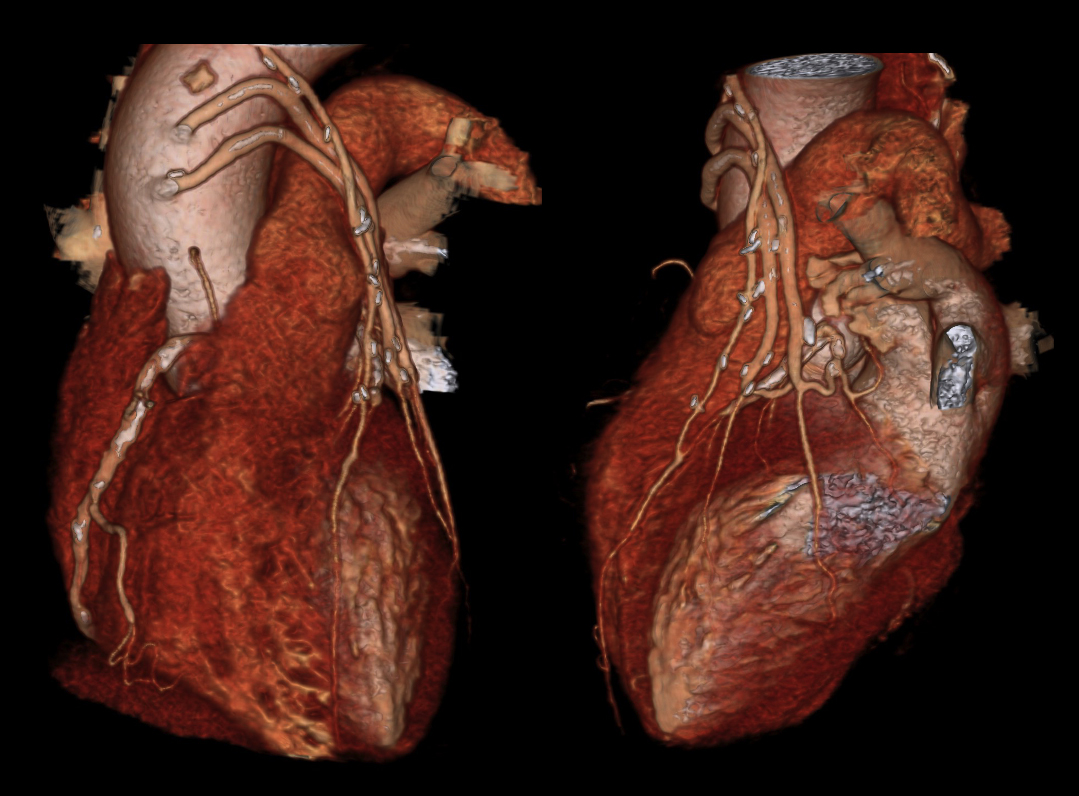
La evolución de la ATCC ha sido notable en los últimos 20 años, lo cual la ha convertido en la prueba de primera línea en numerosas situaciones clínicas de los pacientes con enfermedad arterial coronaria (EAC). Nuevas directrices de la AHA/ACC, del Reino Unido y de Europa abogan firmemente por la ATCC en pacientes con EAC estable o crónica. La adición de pruebas funcionales (FFR-TC/TC Perfusión) amplían aún más la utilidad de la ATCC para evaluar simultáneamente la anatomía y la función cardiaca.
La posibilidad de visualizar la aterosclerosis coronaria no obstructiva de manera no invasiva hace que la ATCC permita el diagnóstico precoz de la EAC, lo cual facilita la implementación de tratamientos preventivos tempranos con mejor desempeño en este campo que las pruebas funcionales de estrés, que suelen requerir una estenosis grave para detectar la enfermedad. La validación de la ATCC posterior a los ensayos clínicos a gran escala, como PROMISE y SCOT-HEART, siguen reforzando la utilidad clínica de este examen. Los avances tecnológicos en la calidad de imagen, la adquisición de los estudios, en
el posprocesamiento y en la reducción de la dosis de radiación permiten un uso más amplio y seguro de esta modalidad diagnóstica en la actualidad, como lo recomiendan las guías vigentes y como lo ven los autores de acuerdo con su experiencia en este campo.
Descargas
Referencias bibliográficas
Mozaffarian D, Benjamin EJ, Go AS, et al. Executive summary: heart disease and stroke statistics 2016 update: a report from the American Heart Association. Circulation. 2016;133(4):447-54. https://doi.org/10.1161/CIR.000000000000036.
Amini M, Zayeri F, Salehi M. Trend analysis of cardiovascular disease mortality, incidence, and mortality-to-incidence ratio: results from Global Burden of Disease Study 2017. BMC Public Health. 2021;21(1). https://doi.org/10.1186/s12889-021-10429-0.
Abbafati C, Abbas KM, Abbasi M, et al. Global burden of 369 diseases and injuries in 204 countries and territories, 1990-2019: a systematic analysis for the Global Burden of Disease Study 2019. Lancet. 2020;396:1204-222. https://doi.org/10.1016/S0140-6736(20)30925-9.
Halfmann MC, Bockius S, Emrich T, et al. Ultrahigh-spatial-resolution photoncounting detector CT angiography of coronary artery disease for stenosis assessment. Radiology. 2024;310(2):e231956. https://doi.org/doi.org/10.1148/radiol.231956.
Leng S, Bruesewitz M, Tao S, et al. Photon-counting Detector CT: system design and clinical applications of an emerging technology. Radiographics. 2019;39:729-43. https://doi.org/10.1148/rg.2019180115.
Tridandapani S, Banait-Deshmane S, Aziz MU, et al. Coronary computed tomographic angiography: a review of the techniques, protocols, pitfalls, and radiation dose. J Med Imaging Radiat Sci. 2021;52:S1-11. https://doi.org/10.1016/j.jmir.2021.08.014.
Petersilka M, Bruder H, Krauss B, et al. Technical principles of dual source CT. Eur J Radiol 2008;68:362-8. https://doi.org/10.1016/j.ejrad.2008.08.013.
Willemink MJ, De Jong PA, Leiner T, et al. Iterative reconstruction techniques for computed tomography part 1: technical principles. Eur Radiol. 2013; 23:1623-31. https://doi.org/10.1007/s00330-012-2765-y.
Halliburton SS, Tanabe Y, Partovi S, et al. The role of advanced reconstruction algorithms in cardiac CT. Cardiovasc Diagn Ther. 2017;7:527-38. https://doi.org/10.21037/cdt.2017.08.12.
Jiang H. Computed tomography: principles, design, artifacts, and recent advances. Bellingham: Society of Photo Optical; 2015.
Trattner S, Halliburton S, Thompson CM, et al. Cardiac-specific conversion factors to estimate radiation effective dose from dose-length product in computed tomography. JACC Cardiovasc Imaging. 2018;11:64-74. https://doi.org/10.1016/j.jcmg.2017.06.006.
Stocker TJ, Deseive S, Leipsic J, et al. Reduction in radiation exposure in cardiovascular computed tomography imaging: results from the Prospective multicenter registry on radiation dose Estimates of cardiac CT angiography in daily practice. In 2017 (PROTECTION VI). Eur Heart J. 2018;39:3715-23. https://doi.org/10.1093/eurheartj/ehy546.
Zuluaga SA. Cardiotomografía computada/coronariotomografía computada. Rev Colomb Radiol. 2006;17(1):1868-87.
Kopp AF, Schroeder S, Kuettner A, et al. Non-invasive coronary angiography with high resolution multidetector-row computed tomography: results in 102 patients. Eur Heart J. 2002;23:1714-25. https://doi.org/10.1053/euhj.2002.3264.
Becker CR, Knez A, Leber A, et al. Detection of coronary artery stenoses with multislice helical CT angiography. J Comput Assist Tomogr. 2002;26:750-55. https://doi.org/10.1097/00004728-200209000-00015.
Ferraro R, Latina JM, Alfaddagh A, et al. Evaluation and management of patients with stable angina: beyond the ischemia paradigm: JACC state-of-the-art review. J Am Coll Cardiol. 2020;76:2252-66. https://doi.org/10.1016/j.jacc.2020.08.078.
Farkouh ME, Domanski M, Sleeper LA, et al. Strategies for multivessel revascularization in patients with diabetes. N Engl J Med. 2012;367:2375-84. https://doi.org/10.1056/NEJMoa1211585.
Velázquez EJ, Lee KL, Jones RH, et al. Coronary artery bypass surgery in patients with ischemic cardiomyopathy. N Engl J Med. 2016;374:1511-20. https://doi.org/10.1056/NEJMoa1602001.
Perera D, Clayton T, O’Kane PD, et al. Percutaneous revascularization for ischemic left ventricular dysfunction. N Engl J Med. 2022;387:1351-60. https://doi.org/10.1056/NEJMoa2206606.
Knuuti J, Wijns W, Saraste A, et al. 2019 ESC guidelines for the diagnosis and management of chronic coronary syndromes. Eur Heart J. 2020;41:407-77. https://doi.org/10.1093/eurheartj/ehz425.doi:10.1093/eurheartj/ehz425.
Lawton JS, Tamis-Holland JE, Bangalore S, et al. 2021 ACC/AHA/SCAI guideline for coronary artery revascularization: executive summary: a report of the American College of Cardiology/ American Heart Association Joint Committee on Clinical Practice Guidelines. J Am Coll Cardiol. 2022;79:197-215. https://doi.org/10.1161/CIR.0000000000001039.
Virani SS, Newby LK, et al. 2023 AHA/ACC/ACCP/ASPC/NLA/ PCNA guideline for the management of patients with chronic coronary disease: a report of the American Heart Association/American College of Cardiology Joint Committee on Clinical Practice Guidelines. J Am Coll Cardiol. 2023;82:833-955. https://doi.org/10.1161/CIR.0000000000001168.
Boden WE, Marzilli M, Crea F, et al. Evolving management paradigm for stable ischemic heart disease patients: JACC review topic of the week. J Am Coll Cardiol. 2023;81:505-14. https://doi.org/10.1016/j.jacc.2022.08.814.
Maron DJ, Hochman JS, Reynolds HR, et al. Initial invasive or conservative strategy for stable coronary disease. N Engl J Med. 2020;382:1395-407. https://doi.org/10.1056/NEJMoa1915922.
Hochman JS, Anthopolos R, Reynolds HR, et al. Survival after invasive or conservative management of stable coronary disease. Circulation. 2023;147:8-19. https://doi.org/10.1161/CIRCULATIONAHA.122.062714.
Douglas PS, Hoffmann U. Anatomical versus functional testing for coronary artery disease. N Engl J Med. 2015;373:91. https://doi.org/10.1056/NEJMc1505594.
27. SCOT-HEART Investigators. CT coronary angiography in patients with suspected angina due to coronary heart disease (SCOT-HEART): an open label, parallelgroup, multicenter trial. Lancet. 2015;385:2383-91. https://doi.org/10.1016/S0140-6736(15)60291-4.
Bittencourt MS, Hulten E, Ghoshhajra B, et al. Prognostic value of nonobstructive and obstructive coronary artery disease detected by coronary computed tomography angiography to identify cardiovascular events. Circ Cardiovasc Imaging. 2014;7:282-9. https://doi.org/10.1161/CIRCIMAGING.113.001047.
Newby DE, Williams MC, Flapan AD, et al. Role of multidetector computed tomography in the diagnosis and management to patients attending the rapid access chest pain clinic, The Scottish computed Tomography of the heart (SCOT-HEART) trial: study protocol for randomized controlled trial. Trials 2012;13:184.
SCOT-HEART Investigators; Newby DE, Adamson PD, Berry C, et al. Coronary CT angiographyand 5-Year risk of myocardial infarction. N Engl J Med. 2018;379:924-33. https://doi.org/10.1056/NEJMoa1805971.
Adamson PD, Newby DE. The SCOT-HEART Trial. What we observed and what we learned. J Cardiovasc Comput Tomogr. 2019;13:54-8. https://doi.org/10.1016/j.jcct.2019.01.006.
Dodd JD, Kofoed KF, Dewey M, et al. CT or invasive coronary angiography in stable chest pain. N Engl J Med. 2022;387:376-80. https://doi.org/10.1056/NEJMc2206973.
Chang HJ, Lin FY, Gebow D, et al. Selective referral using CCTA versus direct referral for individuals referred to invasive coronary angiography for suspected CAD: A randomized, controlled, open-label trial. J Am Coll Cardiol Img. 2019;12(7_Part_2):1303-12.
Gulati M, Levy PD, Mukherjee D, et al. 2021 AHA/ACC/ASE/CHEST/ SAE/SCCT/ SCMR guideline for the evaluation and diagnosis of chest pain: executive summary: a report of the American College of Cardiology/American Heart Association Joint Committee on Clinical Practice Guidelines. Circulation. 2021;144:e368-e454. https://doi.org/10.1161/CIR.0000000000001030.
Vrints C, Andreotti F, Koskinas KC, et al. 2024 ESC Guidelines for the management of chronic coronary syndrome. Developed by the task force for the management of chronic coronary syndromes of the European Society of Cardiology (ESC) Endorsed by the European Association for Cardio-Thoracic Surgery (EACTS). Euro Heart J. 2024;00:1-123. https://doi.org/10.1093/eurheartj/ehae177.
Lee SE, Chang HJ, Sung JM, et al. Effects of statins on coronary atherosclerotic plaques: The PARADIGM Study. JACC Cardiovasc Imaging. 2018;11(10):1475-84. https://doi.org/10.1016/j.jcmg.2018.04.015.
Taylor CA, Fonte TA, Min JK. Computational fluid dynamics applied to cardiac computed tomography for noninvasive quantification of fractional flow reserve: scientific basis. J Am Coll Cardiol. 2013; 61:2233-41. https://doi.org/10.1016/j.jacc.2012.11.083.
Nørgaard BL, Leipsic J, Gaur S, et al. Diagnostic performance of noninvasive fractional flow reserve derived from coronary computed tomography angiography in suspected coronary artery disease: the NXT trial (Analysis of Coronary Blood Flow Using CT Angiography: Next Steps). J Am Coll Cardiol. 2014;63:1145-55. https://doi.org/10.1016/j.jacc.2013.11.043.
Douglas PS, Pontone G, Hlatky MA, et al. Clinical outcomes of fractional flow reserve by computed tomographic angiography-guided diagnostic strategies vs. usual care in patients with suspected coronary artery disease: the prospective longitudinal trial of FFR (CT): outcome and resource impacts study. Eur Heart J. 2015;36:3359-67. https://doi.org/10.1093/eurheartj/ehv444.
Seitun S, De Lorenzi C, Cademartiri F, et al. CT myocardial perfusion imaging: a new frontier in cardiac imaging. Biomed Res Int. 2018; 2018:7295460. https://doi.org/10.1155/2018/7295460.
Pontone G, Baggiano A, Andreini D, et al. Stress computed tomography perfusion versus fractional flow reserve CT derived in suspected coronary artery disease: The PERFECTION Study. JACC Cardiovasc Imaging. 2019;12:1487-97. https://doi.org/10.1016/j.jcmg.2018.08.023.
Linde JJ, Kelbæk H, Hansen TF, et al. Coronary CT angiography in patients with non-ST-segment elevation acute coronary syndrome. J Am Coll Cardiol. 2020;75:453-63. https://doi.org/10.1016/j.jacc.2019.12.012.
Knuuti J, Ballo H, Juarez-Orozco LE, et al. The performance of non-invasive tests to rule-in and rule-out significant coronary artery stenosis in patients with stable angina: a meta-analysis focused on post-test disease probability. Eur Heart J. 2018;39:3322. https://doi.org/10.1093/eurheartj/ehy267.
Narula J, Chandrashekhar Y, Ahmadi A, et al. SCCT 2021 expert consensus document on coronary computed tomographic angiography: a report of the Society of Cardiovascular Computed Tomography. J Cardiovasc Comput Tomogr. 2021;15(3):192-217. https://doi.org/10.1016/j.jcct.2020.11.001.
Cury RC, Leipsic J, Abbara S et al.CAD-RADS TM 2.0 - 2022 Coronary Artery Disease-Reporting and Data System An Expert Consensus Document of the Society of Cardiovascular Computed Tomography (SCCT), the American College of Cardiology (ACC), the American College of Radiology (ACR), and the North America Society of Cardiovascular Imaging (NASCI). J Am Coll Cardiol Img. 2022;15(11):1974-2001.https://doi.org/10.1016/j.jcmg.2022.07.002.
Descargas
Publicado
Cómo citar
Número
Sección
Licencia
Derechos de autor 2026 Revista colombiana de radiología

Esta obra está bajo una licencia internacional Creative Commons Atribución-NoComercial-CompartirIgual 4.0.
La Revista Colombiana de Radiología es de acceso abierto y todos sus artículos se encuentran libre y completamente disponibles en línea para todo público sin costo alguno.
Los derechos patrimoniales de autor de los textos y de las imágenes del artículo como han sido transferidos pertenecen a la Asociación Colombiana de Radiología (ACR). Por tanto para su reproducción es necesario solicitar permisos y se debe hacer referencia al artículo de la Revista Colombiana de Radiología en las presentaciones o artículos nuevos donde se incluyan.
| Estadísticas de artículo | |
|---|---|
| Vistas de resúmenes | 558 |
| Vistas de PDF | 378 |
| Descargas de PDF | 378 |
| Vistas de HTML | 0 |
| Otras vistas | 0 |